Mining sectoral permits · Chile

Mining permits in Chile: from the file to the resolution

I handle the permits a mine needs both to operate and to sell: Exploitation Project and Closure Plan before SERNAGEOMIN, explosives magazine authorisation, habitual explosives consumer status and ENAMI producer registration. This is not advice from a desk — I am a partner and legal representative of an operating underground copper mine, and these are the very filings I ran for it.

4sectoral permits obtained
1,000 kgauthorised magazine capacity
1,200 t/monthsustained blasting rate
EN · EStechnical documentation
What I handle

The permits that separate an idle deposit from a producing mine

An orebody without permits is a frozen asset. What usually stands between a project on hold and one dispatching trucks is a well-built file, submitted to the right authority, in the right order.

⛏️

Exploitation Project and Closure Plan — SERNAGEOMIN

The founding instrument of any Chilean mine. It defines the mining method, the sequence of workings, the safety measures and the closure obligations.

  • Mining method and design of the workings
  • Sections, ramps, ventilation and access
  • Closure Plan: portal sealing, pit fencing, warning signage
  • Transfer and updating of the instrument between title holders
🧨

Explosives storage — magazine authorisation

Without an authorised magazine there is no in-house blasting, and without in-house blasting the cost per tonne climbs fast.

  • Sizing by equivalent dynamite capacity
  • Siting, safety distances and storage conditions
  • Inventory, stock control and operating autonomy
  • Technical file and follow-up of the application
📋

Habitual explosives consumer status

The qualification that allows a company to purchase and consume explosives on a regular basis instead of working on one-off authorisations.

  • Background of the title holder and the operation
  • Estimated consumption backed by the blasting programme
  • Coordination with the supervising authority
🚛

ENAMI producer registration

Producing is pointless if you cannot sell. Registration unlocks ore dispatch and access to ENAMI purchasing agencies.

  • Registration as a mining producer
  • Corporate and mining-title documentation
  • Dispatch conditions and plant tariff schedules
📄

Technical report on the operation

The document an investor asks for before committing capital: what is there, what is permitted, what is missing and what it costs to restart.

  • Geology, mineralisation and exploration upside
  • Mining method and condition of existing workings
  • Permit status and validation gaps to close
  • Work programme and restart budget
📊

Mining operating costs

The same unit-price discipline I apply in construction, applied to the mine: per metre of advance, per tonne hauled, per hole drilled.

  • Cost per tonne of ore broken and hauled
  • Consumption of steel, drilling steels and explosives
  • Real statutory labour charges and full crew cost
  • Break-even against the plant sale price
Case study · Public extract

An underground copper mine, restarted and in operation

A small-scale operation in the Atacama Region in which I am a partner and legal representative. What follows is an extract of public project information: permits obtained, planned operation, mineralisation and geological context. The exact location, the identification of the mining concessions and all commercial figures are deliberately withheld.

Permits obtained

  • Exploitation Project with a Closure Plan in force before SERNAGEOMIN, including the transfer of the instrument between successive title holders. That is what made it possible to restart the mine without redoing the engineering from scratch.
  • Authorised explosives magazine for 1,000 kg equivalent of 60% dynamite, giving roughly three weeks of autonomy at the planned blasting rate.
  • Habitual explosives consumer status, enabling regular supply instead of case-by-case authorisations.
  • ENAMI producer registration for the dispatch and sale of ore to purchasing agencies.

Planned operation

  • Shrinkage stoping: drilling and blasting on the back of the excavation, keeping the broken ore in place as a working floor for the following cycles.
  • Two access ramps of 3.5 × 3.5 m, allowing loading and haulage to surface.
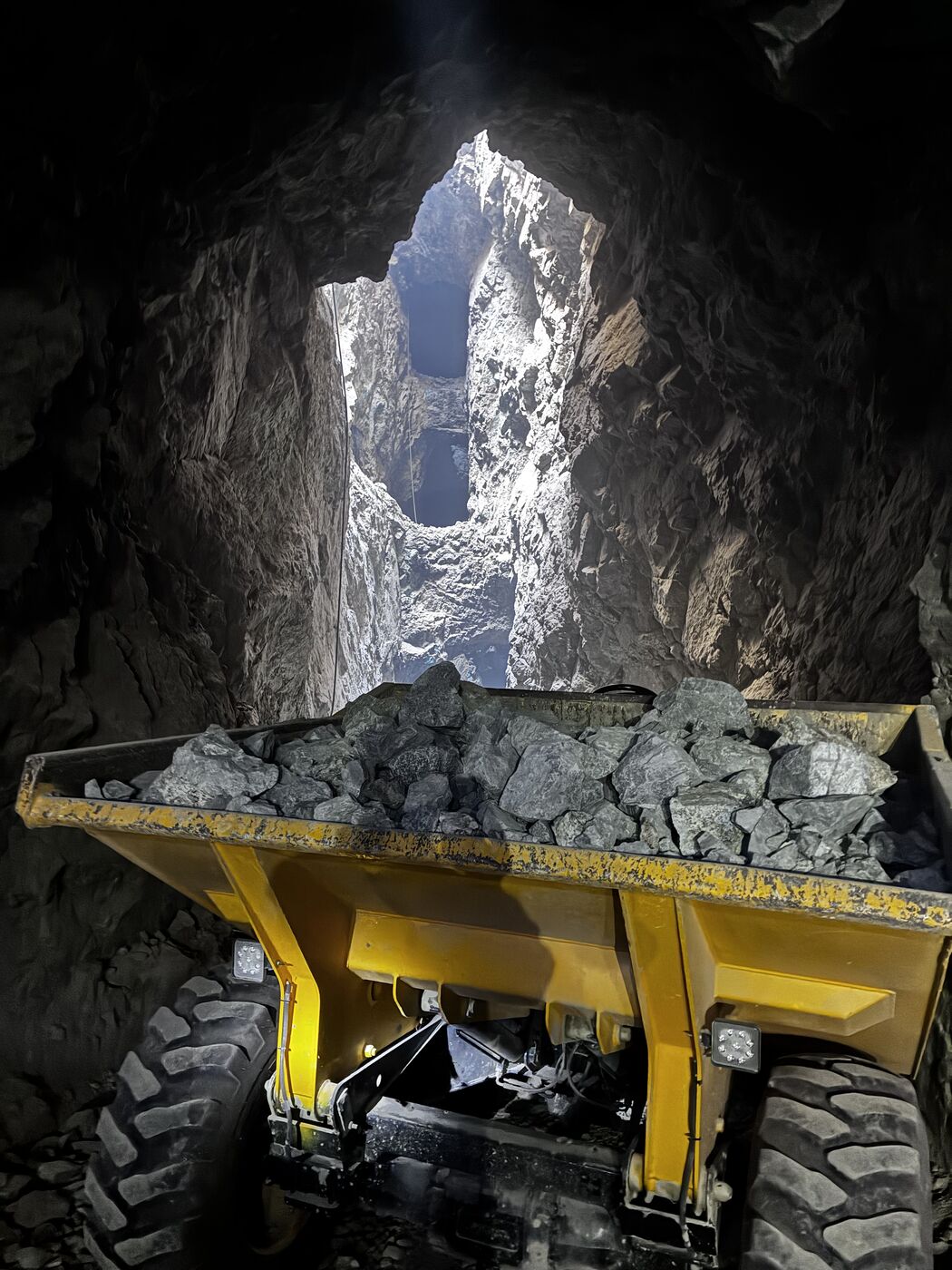
  • Fleet: low-profile front loader, dumper and scoop of up to 2.5 yd³.
  • Target blasting rate of 1,200 t per month.
  • Camp for 15 people, electrically self-sufficient through a 12 kW solar PV plant, with industrial water networks.
  • Ore dispatched to authorised third-party plants; no processing facilities inside the concessions.

Mineralisation

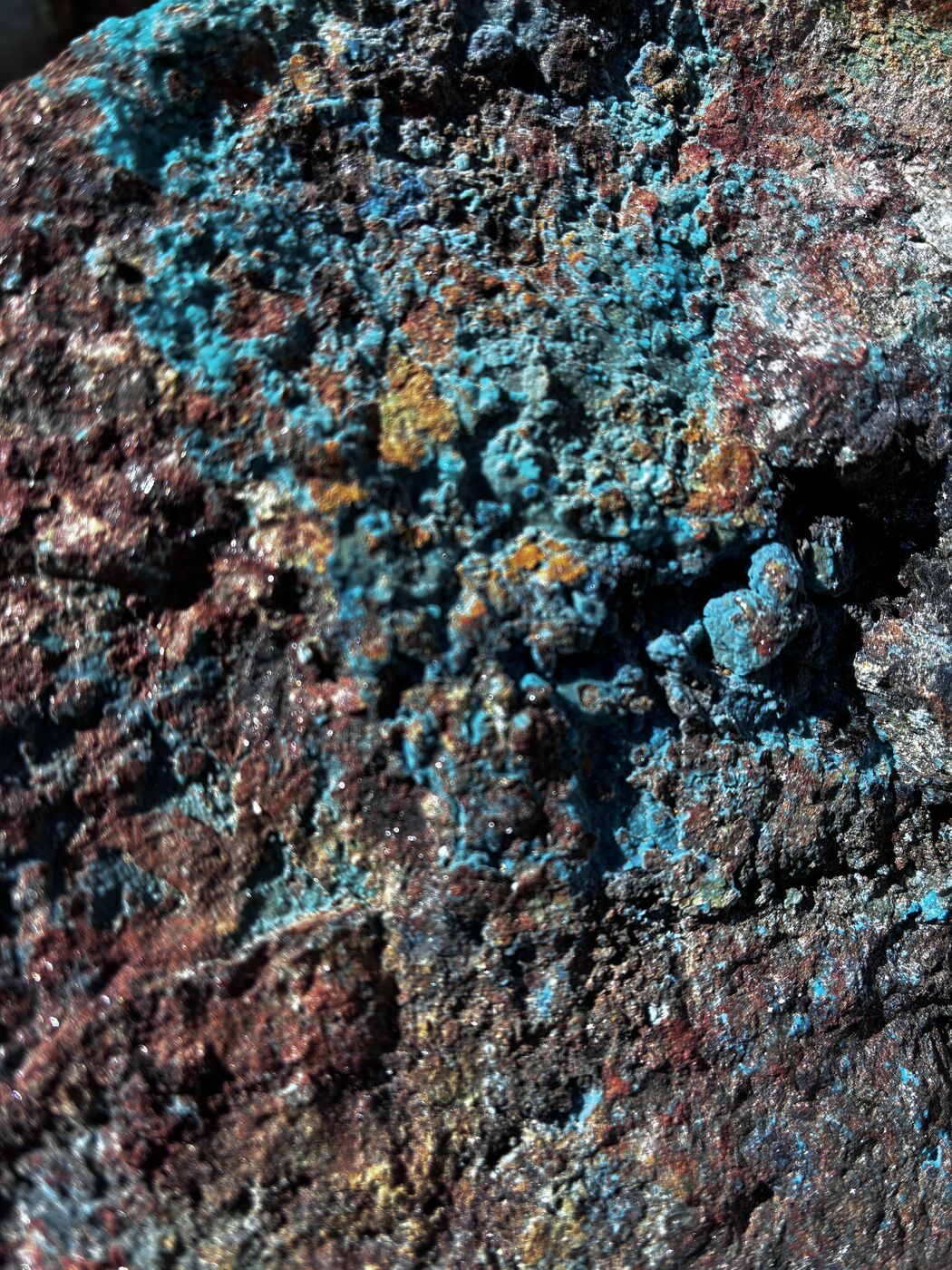
  • Oxide copper mineralisation hosted in vein structures.
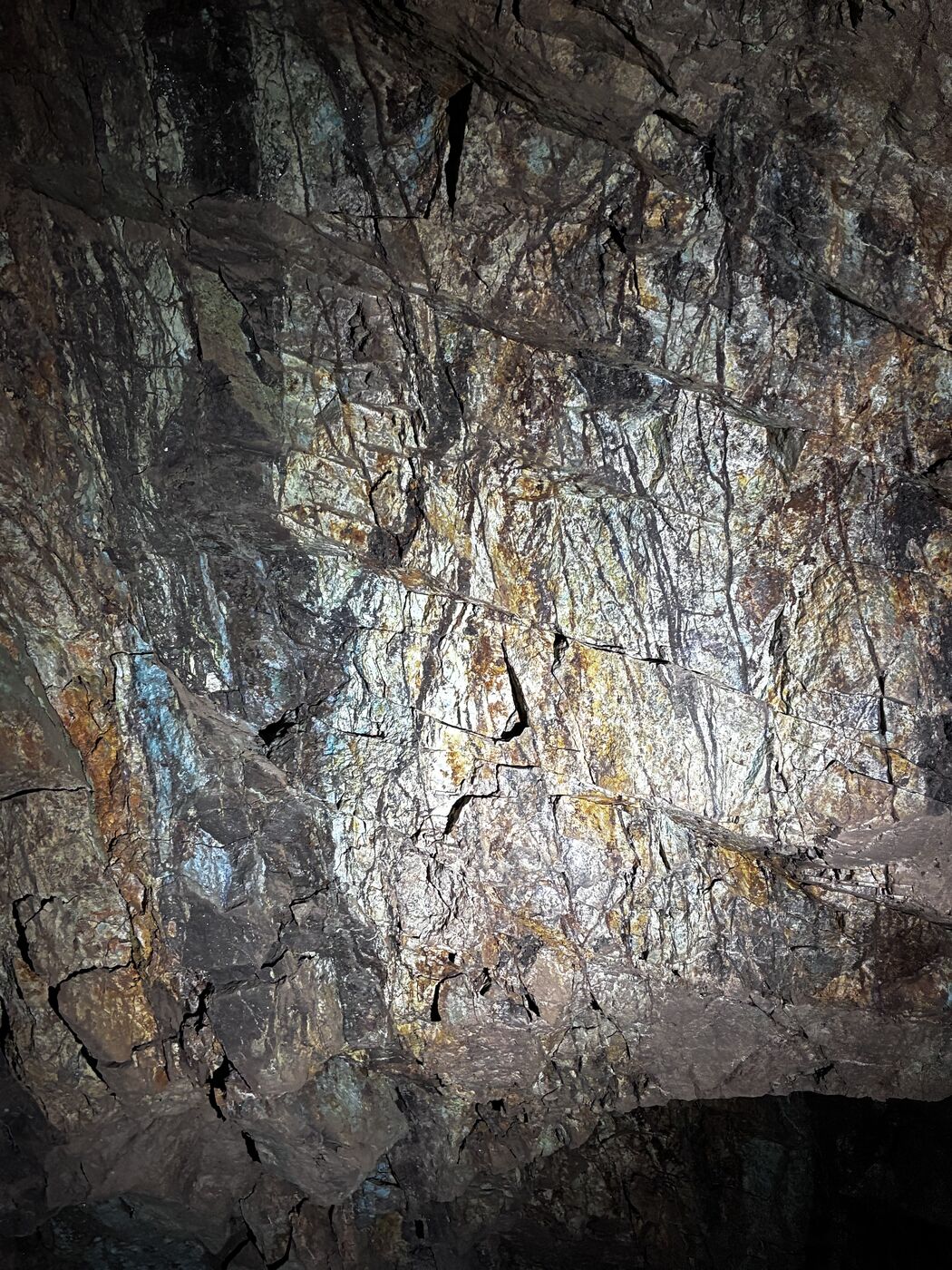
  • Main structures striking north–south, sub-vertical dip, measured average thickness of 2 to 4 metres.
  • Secondary lenticular bodies between the main structures, oriented N45°E to N60°E, dipping approximately 60°, 1 to 4 m thick, 3 to 12 m of horizontal extension and observed vertical development of up to 15 m.
  • Historical grades of 1.27% to 1.62% soluble copper by sector, with differentiated acid consumption: lower in the higher-grade lenticular bodies, higher in the main structures.
  • Gold present as a potential by-product in specific sectors.

Geology and exploration upside

The geological and structural setting is consistent with an IOCG-type hydrothermal system (iron oxide–copper–gold). The exploration upside is concentrated in mineralised continuity at depth, both in the north–south main structures — more continuous but lower average grade — and in the smaller, higher-grade secondary lenticular bodies.

Below the level currently mined, a transition from the oxide domain into sulphide mineralisation can be expected, which changes both the processing route and the purchasing agency the ore is dispatched to. Waste dumps show low acid drainage risk given the high carbonate content of the material.

Fact sheet

Operation type
Underground
Commodity
Oxide copper
Method
Shrinkage stoping
Ramp section
3.5 × 3.5 m
Soluble Cu grade
1.27 – 1.62 %
Vein thickness
2 – 4 m
Blasting rate
1,200 t/month
Magazine
1,000 kg eq.
Camp
15 people
Power
12 kW solar PV
Geological model
IOCG
Region
Atacama
Extract provided for information purposes. It does not constitute a mineral resource certification nor an investment recommendation. Figures correspond to historical operating records and to design parameters of the operation.
On site

My own photographs of the operation

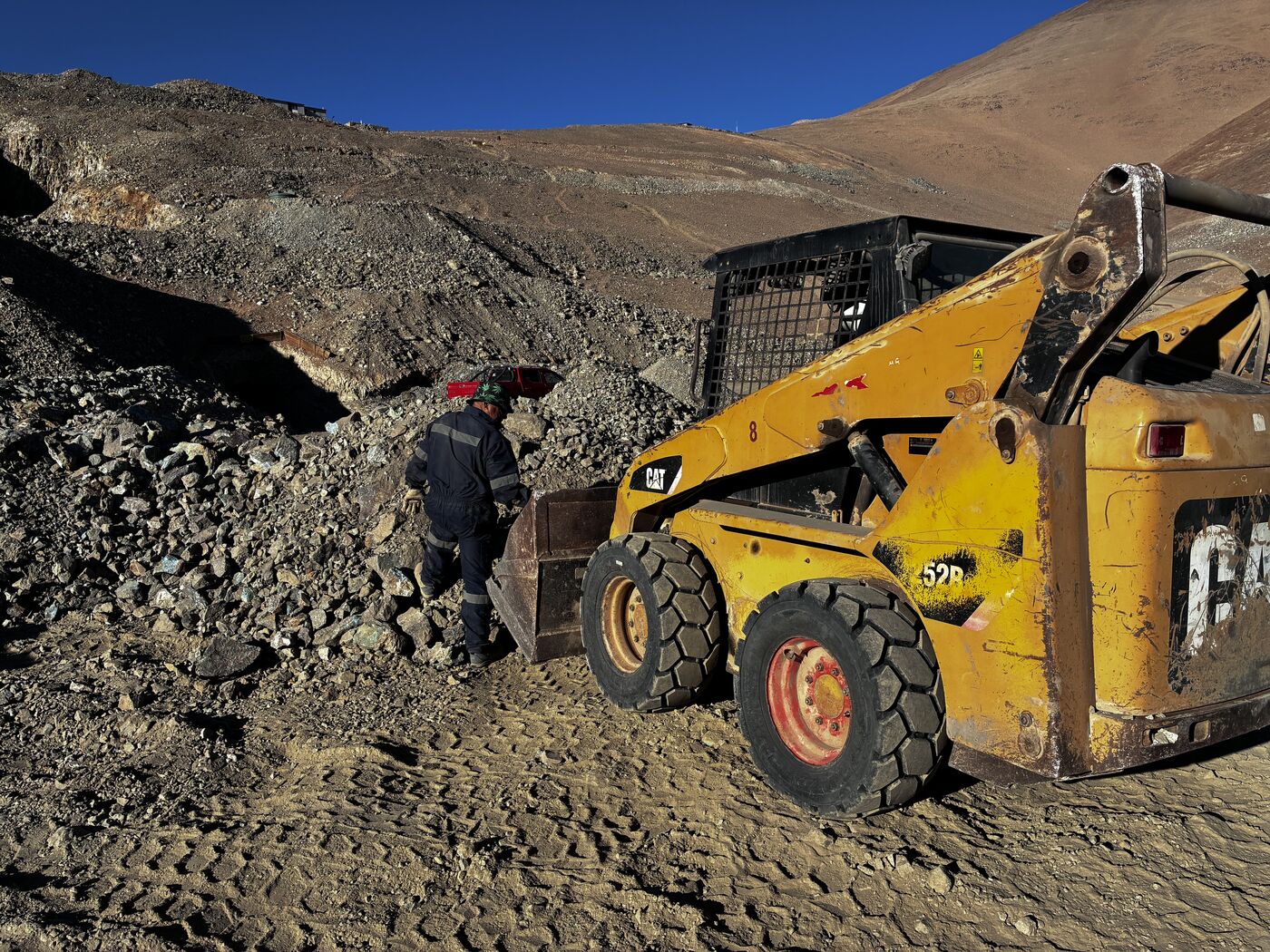
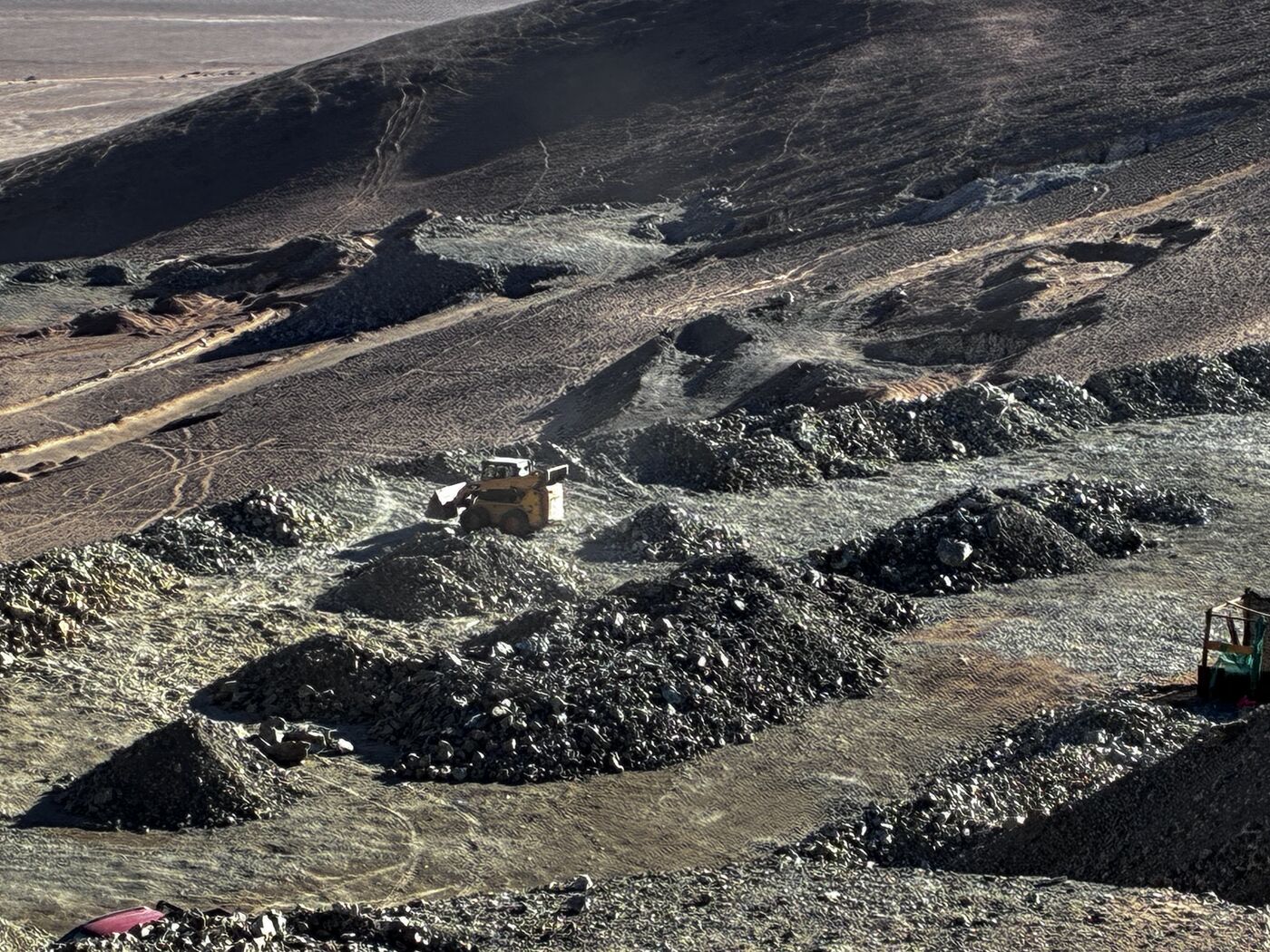
Underground workings, stope faces, loading and stockpiles. All images are my own and correspond to the operation described above.

Ore loading with a CAT skid steer at surface, mining operation in the Atacama Region, Chile
Ore loading at surface
Overview of ore and waste stockpiles on a mine pad
Ore and waste stockpile pads
Close-up of oxide copper mineralisation: chrysocolla and copper oxides on an iron-rich matrix
Oxide copper mineralisation
Underground stope face showing an illuminated mineralised vein structure
Underground stope face
Dumper loaded with ore in an underground drift beneath a shrinkage raise
Haulage under shrinkage stoping
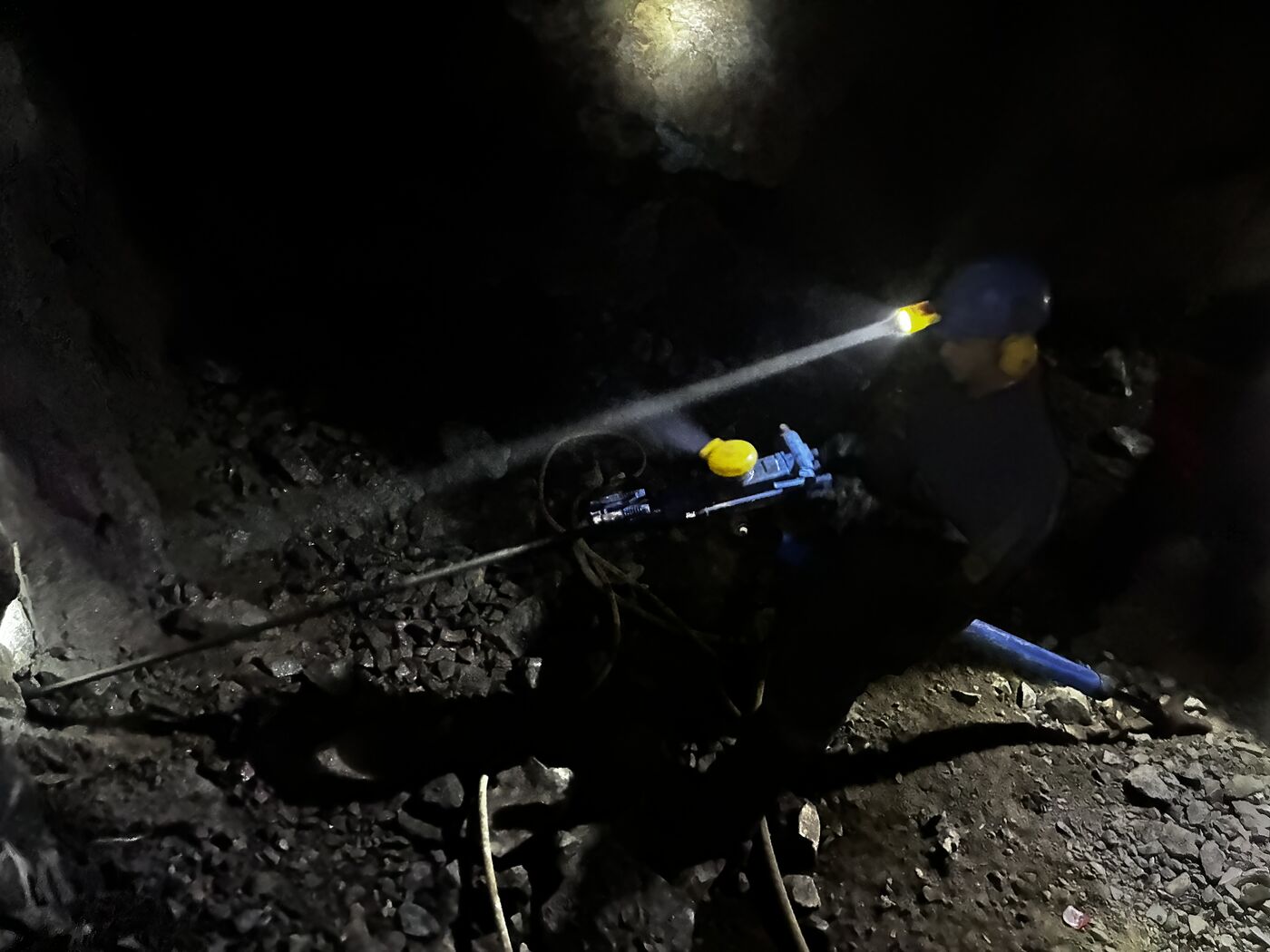
Miner drilling with a pneumatic jackleg in an underground working
Drilling underground
FAQ

What I get asked most

What permits does a small mining operation need to operate in Chile?

At minimum, an Exploitation Project with a Closure Plan approved by SERNAGEOMIN. If the operation uses explosives, add the storage (magazine) authorisation and the habitual consumer qualification. And to sell ore to ENAMI you also need producer registration. These are four separate filings, before different authorities, on different timelines: it pays to sequence them from the start rather than discovering them one at a time.

Can an approved Exploitation Project be transferred to another title holder?

Yes. The approved instrument can be assigned between title holders through the corresponding procedure. In practice it is the fastest and cheapest route to restart a mine with history: you inherit the approved engineering instead of rebuilding it. I have managed this in an operation that passed through three successive title holders while keeping the same instrument in force.

Does a small-scale operation have to enter the environmental assessment system (SEIA)?

It depends on the scale, on whether processing facilities exist inside the concessions and on the footprint of the operation. A contained operation with no plant of its own, dispatching ore to authorised third-party plants, is usually not required to enter. It is a case-by-case assessment, and it is worth making before investing rather than after.

How long does the explosives storage permit take?

It depends on the state of the file and the workload of the authority. In my recent experience, digitising the procedure did not speed it up: it went from weeks to months. That is why it should be filed early and in parallel with the rest, not when blasting is already needed.

Do you also work with investors evaluating the purchase or financing of a mine?

Yes. I prepare the technical report that organises the scattered information of a mining asset — geology, existing workings, permits in force, validation gaps, work programme and budget — so that the investment decision rests on verifiable records rather than on narratives.
Contact

Tell me where your operation stands

If you have a deposit held up by paperwork, an operation that needs to be regularised, or an asset you want to present to an investor, write to me. The first conversation is free.

💬 Message me on WhatsApp ✉ zeryan.guerra@gmail.com

Mining Engineer, Universidad de La Serena · Available across Chile · Technical documentation in English and Spanish.